
As an Amazon Associate and member of other affiliate programs, I earn from qualifying purchases.
If you are looking to boost your immune system—and warm your soul a little, too—this recipe is for you.
Sweet, floral, and syrupy, this Homemade Honey Citron Tea is more like a marmalade than a traditional tea.
It strikes the perfect balance between the tart brightness of citrus and the soothing warmth of raw honey.
While inspired by traditional Korean Yuja Cha, this version uses accessible Meyer lemons to create a healing tonic you can keep in your fridge to enjoy for weeks—that is, if you can keep it around for that long!
This soothing tea is a staple in our recipe collection for good reason. It’s simple, potent, and utterly delicious.

Why You’ll Love This Recipe
Key Ingredients
This list is simple and sweet, just like the recipe.
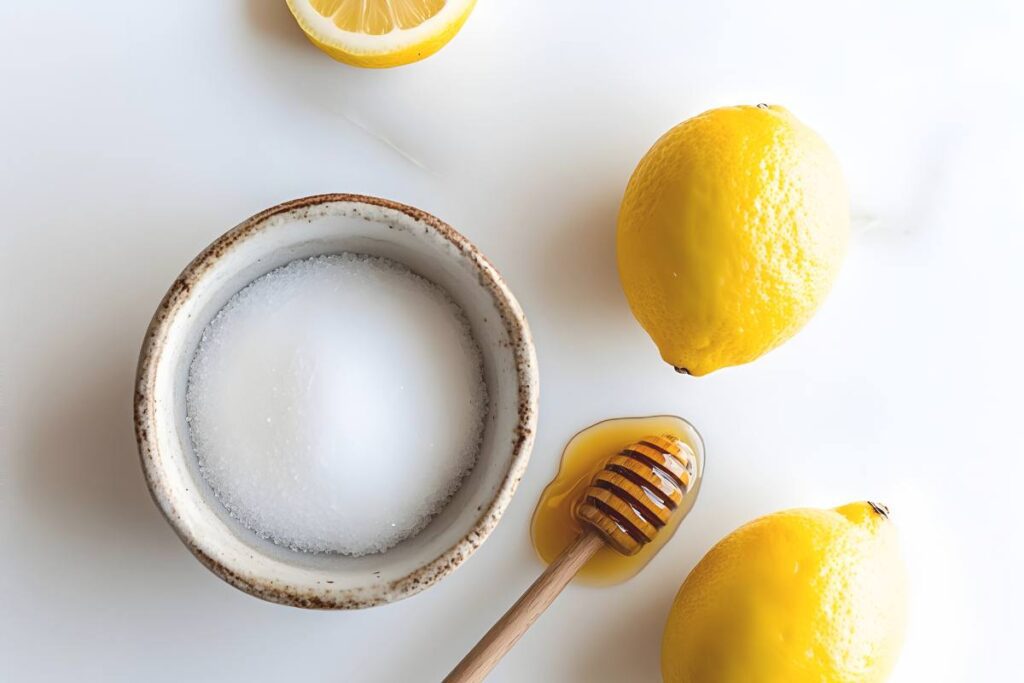
- Meyer Lemons: We use these because they are sweeter and have thinner skins than regular Eureka lemons. Since we eat the rind in this tea, the softer skin of the Meyer lemon is essential for the best texture.
- Raw Honey: Local, unfiltered honey is best. It contains natural enzymes and pollen that can help with seasonal allergies—a principle we value in Intentional Wellness.
- Sugar: Just a small amount is needed to help draw the juices out of the lemons and create that syrupy consistency.
Substitutions
- No Meyer Lemons? You can use regular lemons, but you must slice them paper-thin and perhaps blanch them quickly to reduce bitterness.
- Sugar-Free? You can omit the white sugar and use only honey, but the mixture may be less syrupy.
What is Honey Citron Tea?
This recipe is inspired by Korean Yuja Cha (also known as Yuzu tea).
If you’ve ever visited the international section of a grocery store (one of my favorite aisles), you might have seen large glass jars filled with bright yellow marmalade.
That is Yuja Cha.
In Korea, people drink this tea to soothe sore throats, kick nagging coughs, and warm up during frigid winters.
I first fell in love with it while living in Seoul, South Korea.
It was the first time I had ever consumed the rind of the fruit along with the tea, and I was hooked immediately.
A note on Authenticity
Traditional Yuja Cha is made from the Yuja fruit (Yuzu).
This fruit is incredibly fragrant but difficult to find in the U.S.
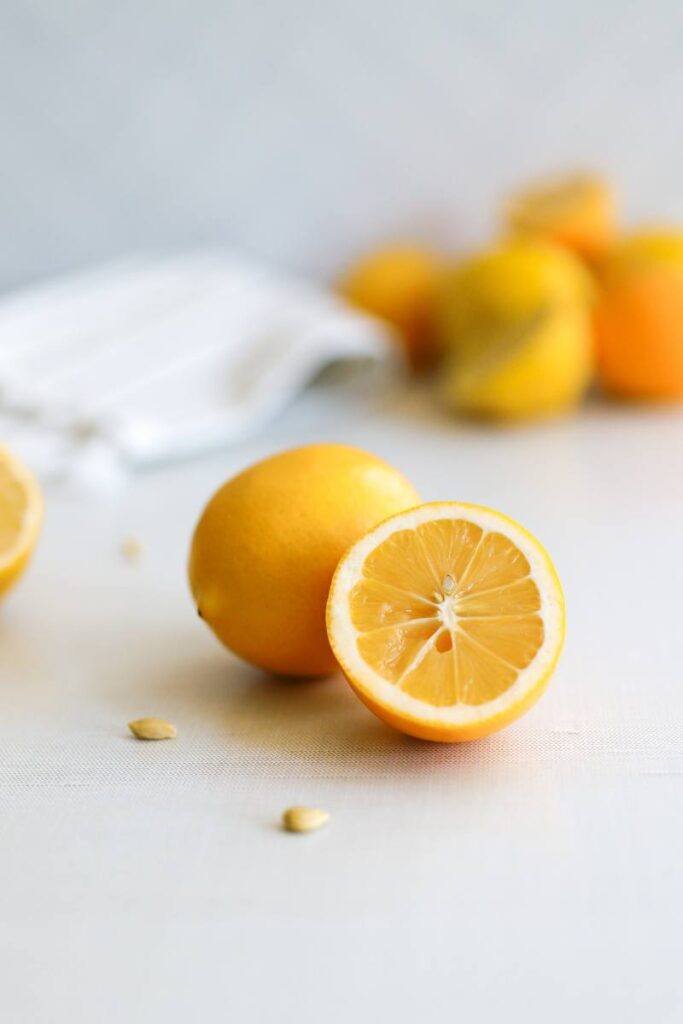
To make this accessible for American kitchens, I use Meyer Lemons.
They are the closest botanical cousin—sweet, floral, and thin-skinned—making them the perfect substitute for an authentic experience.
Health Benefits of Honey Citron Tea
Since this recipe is often used as a home remedy, it’s helpful to know why it works. (Note: This is not medical advice, so please don’t take it as such).
How to Make Honey Citron Tea
Making this tea base is a simple, mindful process.
While slicing the lemons requires a little patience, the reward is a fridge stocked with healing tea for weeks.
Before you begin: You’ll need an 8-ounce glass jar for this recipe. Ensure it’s sterilized and your lemons are scrubbed clean to remove any wax or residue.
Step 1. Prep the Fruit.
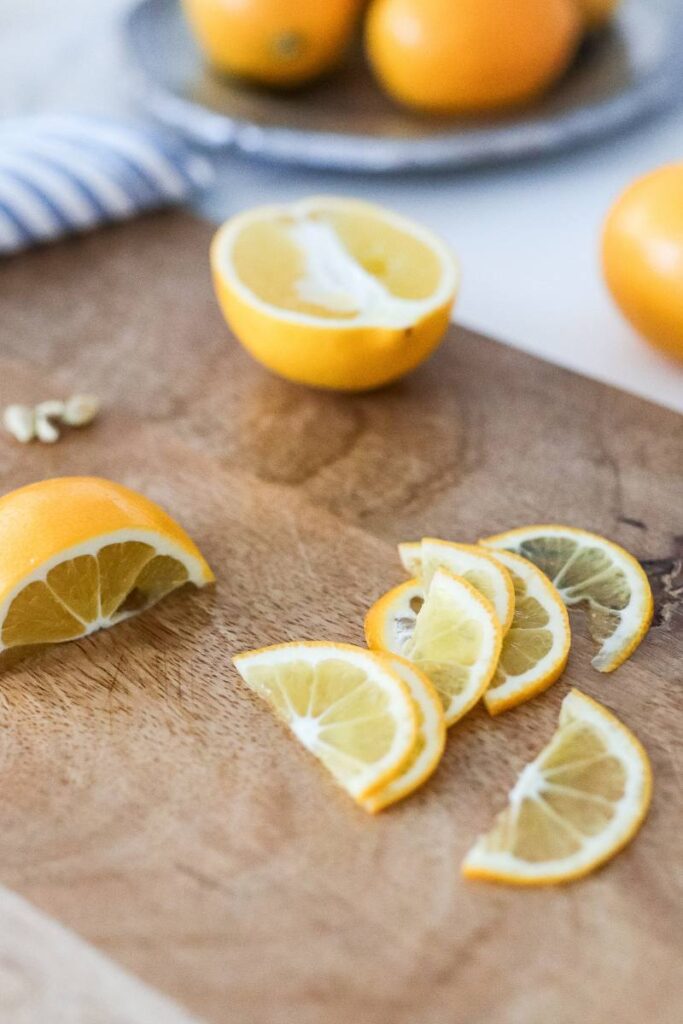
Scrub your lemons thoroughly. Slice them lengthwise and remove the seeds. Then, slice them into paper-thin half-moons.
Step 2. Create the Base.
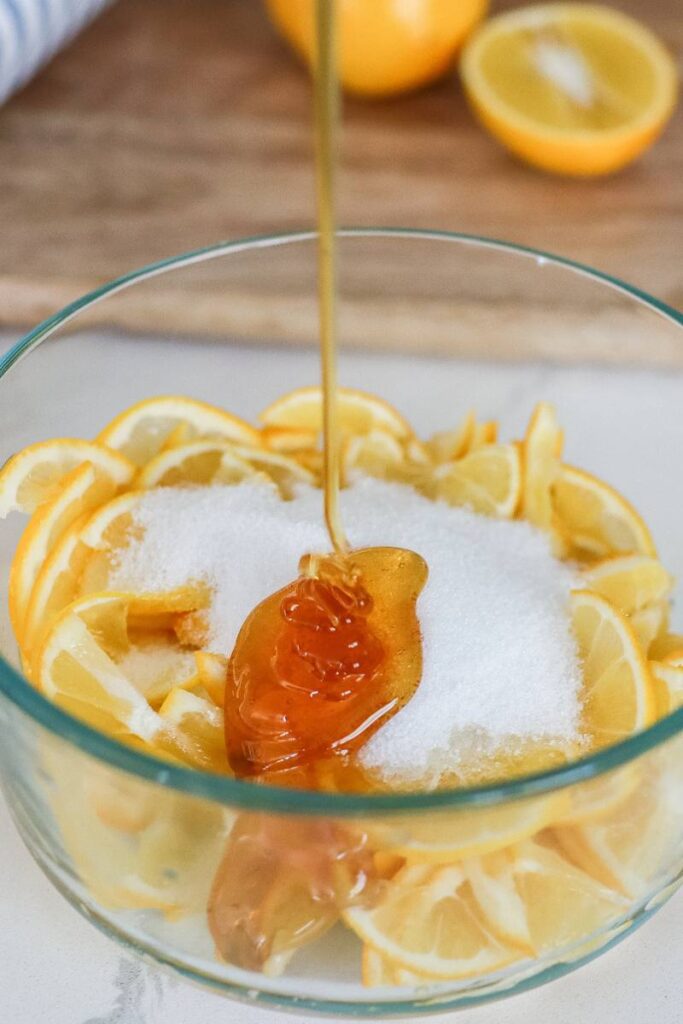
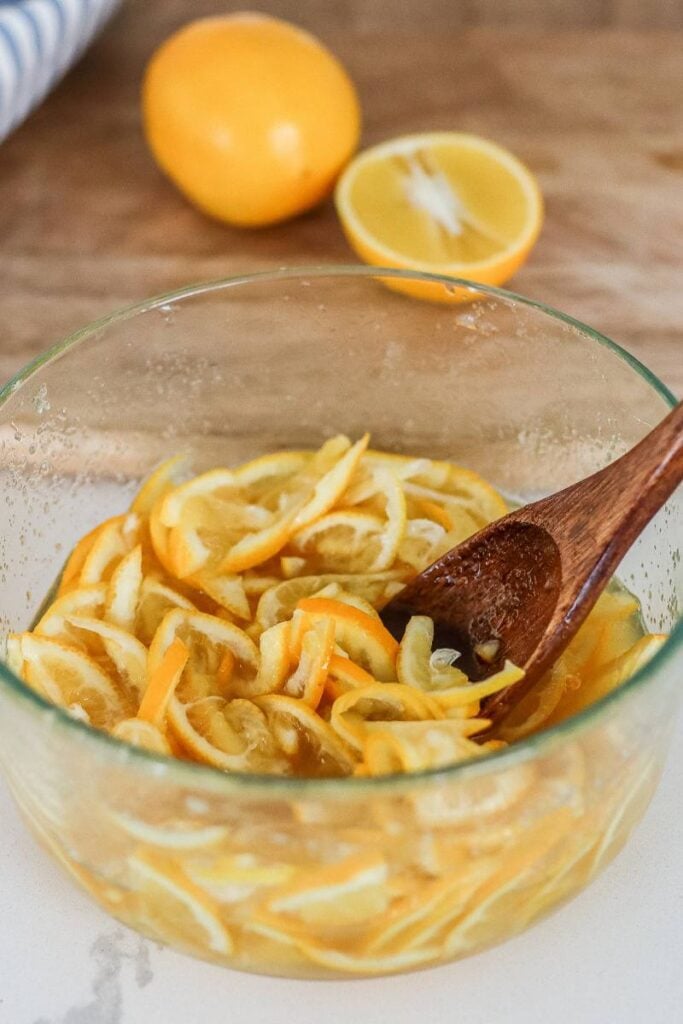
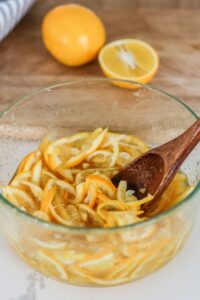
In a clean bowl, toss the lemon slices with the honey and sugar. Stir gently until the lemons are well-coated.
Step 3. Jar and Wait.
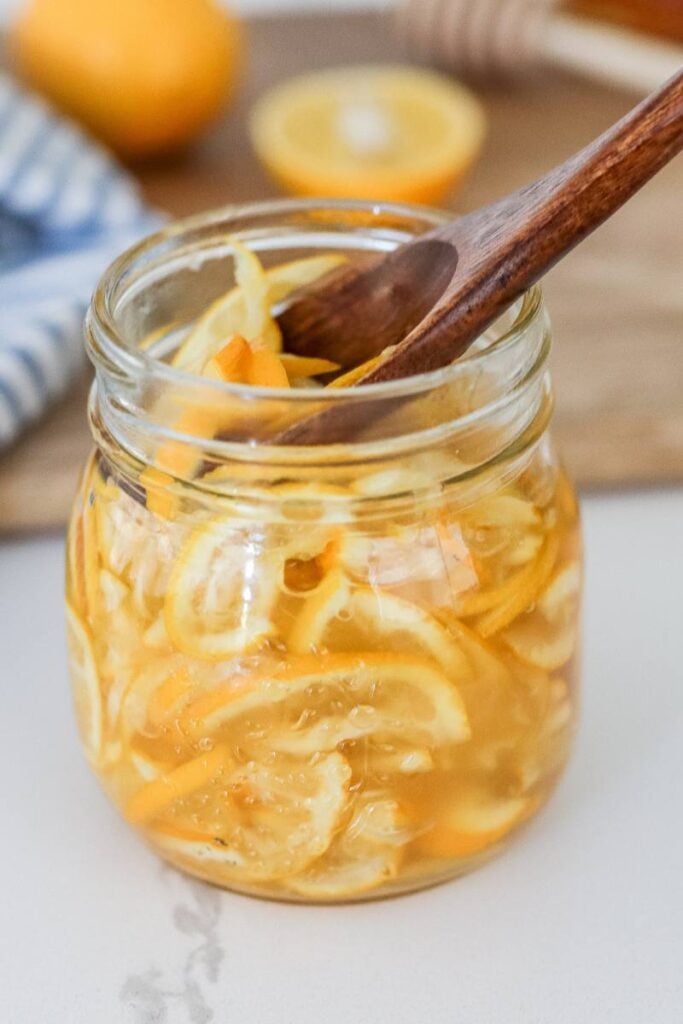
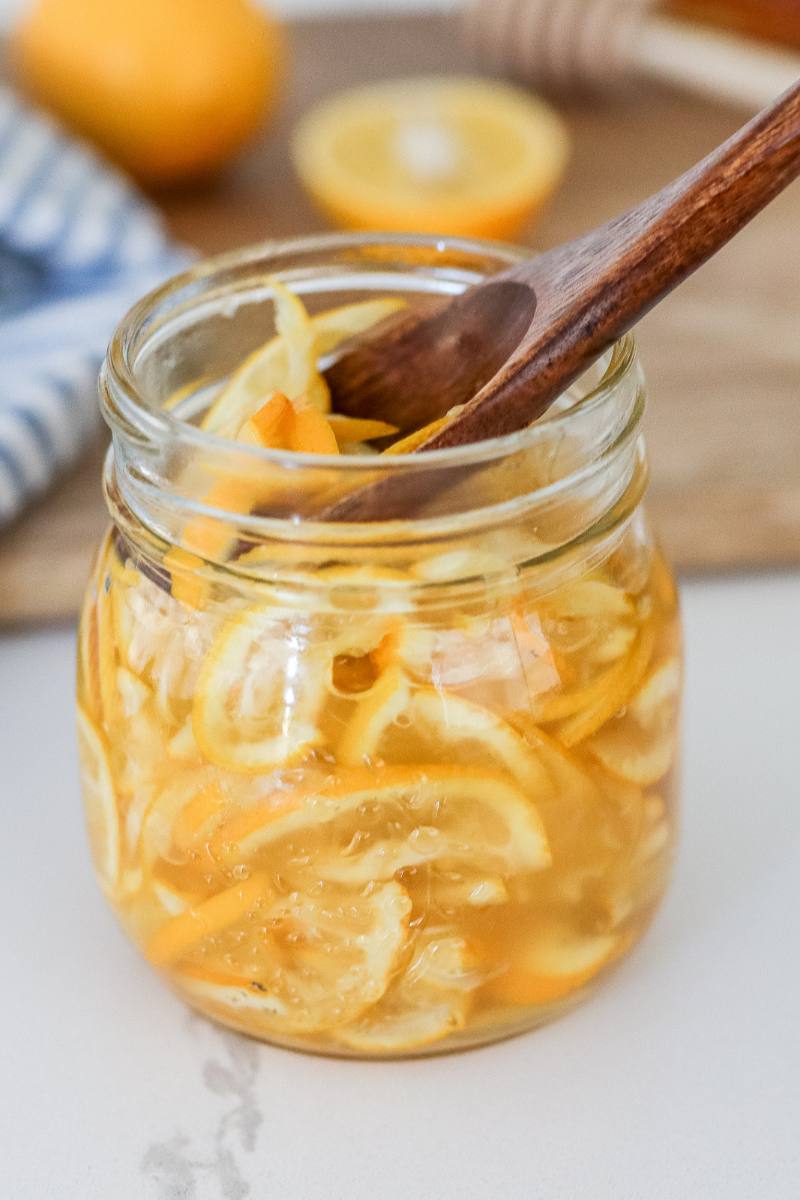
Transfer the mixture into a sterilized glass jar. Close the lid tightly and let the jar sit on the counter for 24 hours. This allows the sugar to draw out the moisture, creating a syrup. After that, move it to the fridge.

Expert Tips & Troubleshooting
- The Texture Truth: Store-bought Citron Tea often has a “jelly-like” texture because manufacturers add thickeners like pectin or carrageenan. This homemade version is natural, so it will be more syrupy and liquid. This is normal!
- Eat the Rind: Don’t throw away the lemon slices at the bottom of your mug! They are candied by the honey and are full of fiber and Vitamin C.
- Sterilize Your Jars: Since this sits in the fridge for a month, make sure your jar is boiled or run through the dishwasher first to prevent spoilage.
Recipe FAQs
Yuja (Yuzu) is a citrus fruit native to East Asia that looks like a small, bumpy grapefruit.
It has a complex flavor that is tart like a lemon but floral like a lime or mandarin orange.
Since Yuja is hard to find in the U.S., Meyer lemons are the best substitute because their skins are thinner and sweeter than regular lemons.
No. Despite the name “tea,” this is actually a fruit preserve (marmalade) mixed with hot water.
It contains zero tea leaves, making it naturally caffeine-free and safe for children or evening sipping.
Yes, absolutely! The rind softens as it marinates in the honey and becomes chewy and candied.
Eating the rind provides extra fiber and Vitamin C.
Store-bought Citron Tea (Yuja Cha) often contains thickeners like carrageenan or pectin to give it that “jammy” texture.
This homemade version uses only natural fruit and honey, so it will be more syrupy.
This is normal and means your tea is free of additives!
Since honey and sugar are natural preservatives, this tea base will last for up to 1 month in the refrigerator if kept in a sterilized jar.
Always use a clean spoon when scooping to prevent bacteria from getting in.
Yes, generally. Since it is caffeine-free and natural, it is often a popular choice for pregnant women seeking relief from nausea or colds.
However, always consult your doctor regarding sugar intake or specific allergies.
Nourished for Purpose
There is something deeply restorative about the process of making this tea.
It requires us to slow down—washing the fruit, slicing it thin, and waiting for the syrup to form.
In a culture that demands instant results, this recipe reminds us that healing and nourishment often take time.
It’s something our bodies require of us.
Caring for ourselves isn’t selfish; it is an act of gratitude for the vessel God has given us to do His work.
As you sip this warm tea, I hope it offers you a moment of quiet rest in your busy day.

Homemade Honey Citron Tea (Korean Yuja-Cha)

Equipment
As an Amazon Associate, I earn from qualifying purchases.
Ingredients
- 3 Meyer lemons
- ¼ cup organic local honey
- ¼ cup sugar
Instructions
- Prep the Fruit. Scrub your lemons thoroughly. Slice them lengthwise and remove the seeds. Then, slice them into paper-thin half-moons. Tip: The thinner the slice, the better the tea will steep!
- Create the Base. In a clean bowl, toss the lemon slices with the honey and sugar. Stir gently until the lemons are well-coated.
- Jar and Wait. Transfer the mixture into a sterilized glass jar. Seal it tight and let it sit on the counter for 24 hours. This allows the sugar to draw out the moisture, creating a syrup. After that, move it to the fridge.

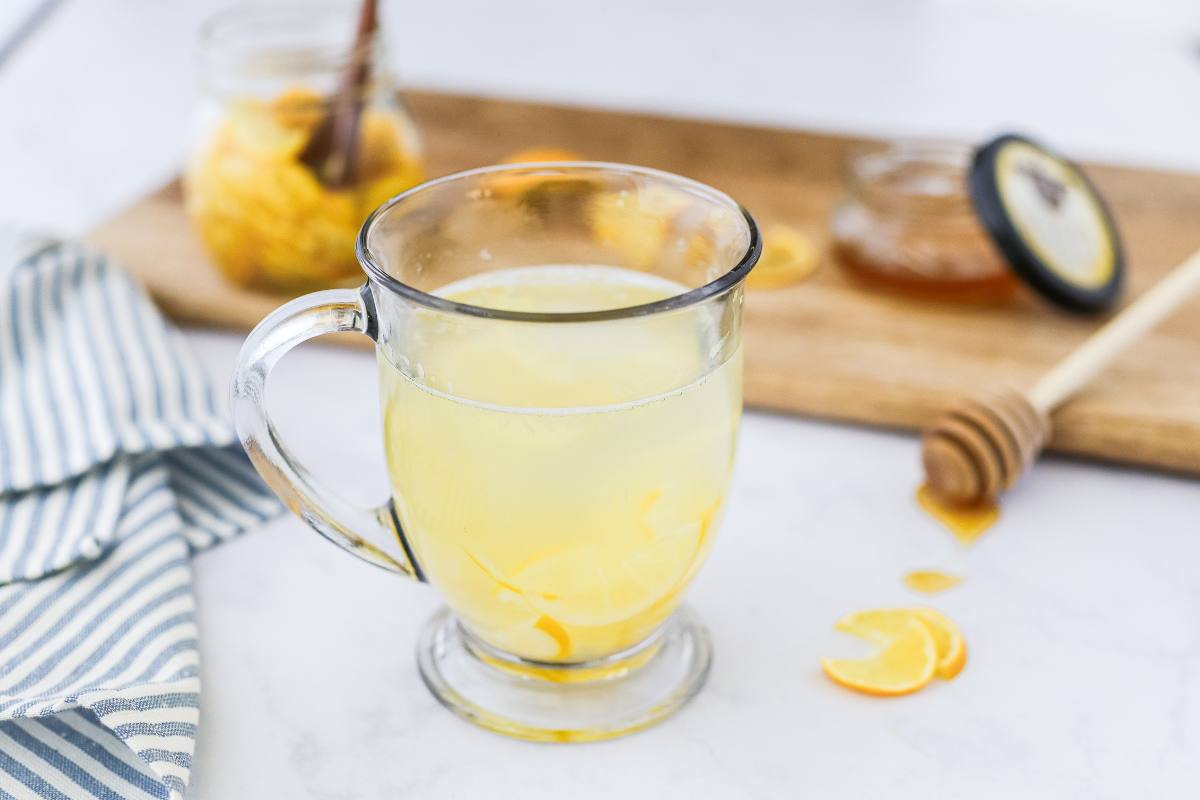
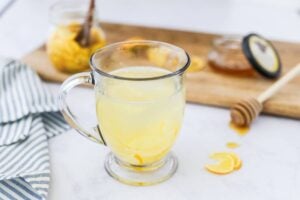
- Serve it Hot or Cold. Hot: Stir 2 tablespoons of the base into 6 oz of hot water. Cold: Stir 2 tablespoons into cold sparkling water for a "Citron Fizz."
Notes
- The Texture Truth: Store-bought Citron Tea often has a “jelly-like” texture because manufacturers add thickeners like pectin or carrageenan. This homemade version is natural, so it will be more syrupy and liquid. This is normal!
- Eat the Rind: Don’t throw away the lemon slices at the bottom of your mug! They are candied by the honey and are full of fiber and Vitamin C.
- Sterilize Your Jars: Since this sits in the fridge for a month, make sure your jar is boiled or run through the dishwasher first to prevent spoilage.
Nutrition
PIN THIS FOR LATER
More Healthy Drink Recipes You May Love


Disclaimer: All content and information on this website is for informational purposes only and does not constitute medical advice. Always consult a medical professional or healthcare provider if you are seeking medical advice, diagnosis or treatment. Sweet New Roots is not liable for risks or issues associated with using or acting upon the information on this website.





This looks amazing! I’m thinking of making some homemade citrus peel pectin to add into this for a more gel-like texture but I’ll definitely try it your way first.
Thank you, May! Citrus peel pectin sounds interesting! I’ve never considered it so I’d love to know if you end up using it and how it turns out. Perhaps we can add a “Reader Tip” for others who come across this recipe. It’s been one of the most popular on my website for years!
I would like to add Ginger. Would that work with this recipe
This is a great question. You can absolutely add ginger! Use fresh ginger and ensure you peel it to remove the skin which tends to be a bit bitter. The ginger is going to intensify with time, so use your best judgement based on your personal preference. You can either grate the ginger (1-2 TBSP for a milder flavor) or slice 1/4 cup for a strong, spicy flavor, which will be amazing during cold and flu season! Add the ginger to the sterilized jar at the same time that you add the lemons. Let me know if you have any other questions. And, I’d love to know how the recipe works for you! -Cortney
I made this tea but after 23 hours the base is still rind about 1/4 cup liquid. It didn’t become gel like as in commercial citron tea. So my base is rind with some
pulp. What should I do?
Hi Joan, This recipe will not gelatinize or taste like commercial products because it uses far less sugar and doesn’t contain preservatives or additives of any kind. The rind will soften, but it will not break down significantly. Go ahead and try to use a teaspoon or two in a cup of tea. Be sure to give it a good stir in the jar. If it’s not sweet enough, add more honey. Or, if you’re not watching your sugar intake add sugar to your liking. I love to consume the rind, but as noted in the article you can strain the tea for a rind-free, pulp-free tea. I hope this helps!
Thank you for sharing your experience!
Delicious!